
Pinterest has become much more than a platform for collecting ideas and inspiration. Today, millions of shoppers use it to discover products, compare brands, and save items they plan to buy later. For ecommerce businesses, that creates a valuable opportunity to reach customers who are already looking for ideas and products. 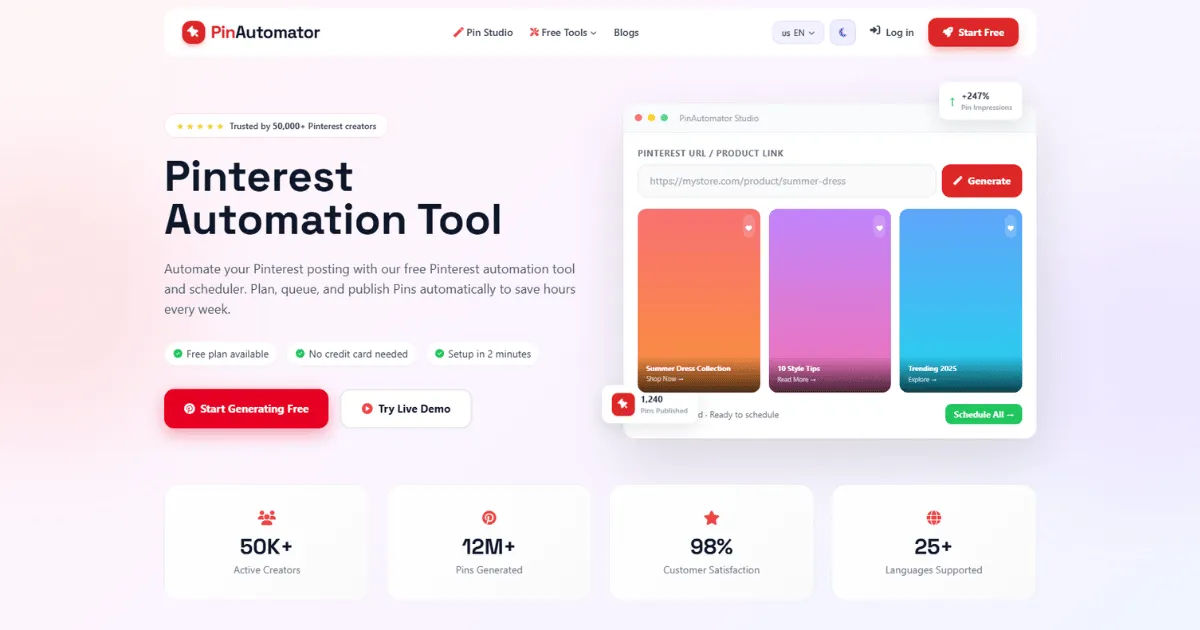
A Pinterest Automation Tool can save time by scheduling Pins, organizing content, and helping businesses maintain regular activity without manually publishing every post. However, automation is not a magic solution. Success on Pinterest still depends on creating useful content, understanding your audience, and following Pinterest's best practices. The right balance between automation and genuine engagement often produces the best long-term results.
In this guide, you'll learn how Pinterest automation works, whether it benefits ecommerce businesses, its advantages and limitations, and how to use automation responsibly while growing your online store.
Pinterest as an Ecommerce Platform
Unlike many social media platforms that focus on conversations and entertainment, Pinterest functions more like a visual search engine. Users search for ideas, products, tutorials, home inspiration, fashion trends, recipes, and gift suggestions. Many of these searches happen before someone makes a purchase.
This creates a unique opportunity for ecommerce businesses because people using Pinterest often have buying intent. They are planning future purchases, researching options, or looking for products that solve a specific need.
A typical Pinterest user might search for:
- Home office furniture
- Summer fashion ideas
- Wedding decorations
- Kitchen storage solutions
- Fitness equipment
- Handmade gifts
- Beauty products
- Holiday decorations
Each search represents an opportunity for businesses to showcase relevant products.
Unlike posts on many social media platforms that disappear within hours, Pinterest Pins can continue generating traffic for months or even years. This longer lifespan makes Pinterest particularly attractive for ecommerce marketing.
What Is a Pinterest Automation Tool?
A Pinterest Automation Tool is software designed to automate repetitive Pinterest marketing tasks. Instead of manually logging into Pinterest every day, businesses can prepare their content in advance and let the software publish Pins according to a planned schedule.
Most automation tools are built to improve efficiency rather than replace marketing strategy.
Common features include:
- Scheduling Pins weeks or months ahead
- Publishing content at optimal times
- Managing multiple Pinterest boards
- Bulk uploading images
- Organizing campaigns
- Tracking engagement
- Measuring click-through rates
- Managing several Pinterest accounts from one dashboard
Some tools also provide reporting features that help businesses understand which Pins attract the most impressions, saves, and website visits.
Automation allows ecommerce owners to focus more time on product development, customer service, and order fulfillment instead of repetitive posting tasks.
Why Ecommerce Businesses Use Pinterest Automation
Running an online store involves countless daily responsibilities. Business owners manage inventory, fulfill orders, respond to customers, update product listings, and oversee marketing campaigns. Pinterest marketing can easily become inconsistent when time is limited.
Automation helps solve this challenge.
Instead of remembering to publish Pins every day, businesses can prepare an entire month's worth of content during one planning session.
This consistency helps maintain visibility without requiring daily manual work.
Automation also supports seasonal planning.
For example, an online gift shop can schedule holiday Pins months before Christmas. A clothing retailer can prepare seasonal fashion campaigns long before new collections launch.
Planning ahead often produces better marketing because businesses have more time to create attractive visuals and compelling product descriptions.
How Pinterest Automation Actually Works
Pinterest automation begins with content preparation.
Businesses first create high-quality Pin images designed for Pinterest's vertical format. Each Pin includes an eye-catching image, keyword-focused title, helpful description, and a destination link pointing to the ecommerce website.
Once the content is ready, it is uploaded into the automation platform.
The software allows users to choose:
- Publishing date
- Publishing time
- Target board
- Campaign order
- Posting frequency
The software then publishes the content automatically according to the selected schedule.
Some platforms also recommend the best posting times based on historical engagement data.
This removes much of the repetitive work while allowing marketers to maintain full control over their publishing strategy.
Benefits of Using Pinterest Automation for Ecommerce
Automation provides several meaningful advantages for ecommerce businesses when used correctly.
The most obvious benefit is time savings.
Instead of logging into Pinterest every day, businesses can prepare content in batches. A few hours of planning can schedule weeks of marketing activity.
Consistency is another major benefit.
Pinterest rewards active accounts that publish useful, fresh content regularly. Automation helps maintain this consistency even during busy business periods.
Marketing also becomes easier to organize.
Instead of creating content randomly, businesses can develop monthly campaigns that align with product launches, holidays, promotions, or seasonal demand.
Analytics improve decision-making.
Many automation tools provide reports showing which Pins generate the highest engagement and website traffic. Businesses can use this information to improve future content instead of relying on guesswork.
Automation also reduces human error.
Scheduled publishing prevents forgotten posts and missed promotional opportunities.
For businesses operating internationally, automation allows Pins to be published during peak audience hours, even when the business owner is offline or asleep.
Can Pinterest Automation Increase Sales?
Automation itself does not increase sales.
Good marketing increases sales.
Automation simply makes good marketing easier to execute consistently.
The biggest sales advantage comes from maintaining regular visibility.
Every new Pin creates another opportunity for potential customers to discover products through Pinterest search results, category feeds, and recommendations.
More quality Pins generally mean more opportunities to attract website visitors.
However, traffic only turns into sales when the rest of the customer experience works well.
Successful ecommerce businesses combine Pinterest automation with:
- High-quality product photography
- Competitive pricing
- Fast websites
- Mobile-friendly shopping
- Clear product descriptions
- Positive customer reviews
- Simple checkout processes
Automation helps bring visitors to the store, but the website must convince them to purchase.
Types of Ecommerce Businesses That Benefit Most
Not every business receives identical results from Pinterest.
Pinterest performs especially well for visually appealing products.
Industries that often benefit include:
- Home décor
- Furniture
- Fashion
- Jewelry
- Beauty products
- Handmade goods
- Food products
- Wedding supplies
- Crafts
- DIY products
- Art prints
- Pet accessories
- Children's products
- Travel accessories
- Fitness equipment
Products that naturally inspire people tend to perform better because Pinterest users actively search for ideas before making buying decisions.
Businesses selling highly visual products usually have more opportunities to create attractive Pins that encourage clicks.
Common Mistakes When Using Pinterest Automation
Automation can save time, but poor implementation often limits results.
One common mistake is scheduling the exact same Pin repeatedly.
Pinterest values fresh content. Reusing identical images too frequently may reduce engagement over time.
Another mistake is relying entirely on automation.
Pinterest still values authentic activity. Businesses should occasionally create fresh Pins, update boards, respond to comments when appropriate, and monitor performance.
Ignoring analytics is another problem.
Automation provides valuable reporting data, but many businesses never review it. Without analyzing results, it becomes difficult to improve future campaigns.
Low-quality images also reduce effectiveness.
Pinterest is a visual platform. Poor photography or cluttered designs often receive little engagement regardless of scheduling strategy.
Finally, publishing too frequently can overwhelm followers.
Consistency is important, but quality should always outweigh quantity.
Conclusion
A Pinterest Automation Tool can be a valuable asset for ecommerce businesses, but it works best as part of a well-planned marketing strategy rather than as a shortcut to success. Automation helps save time, maintain a consistent posting schedule, organize campaigns, and monitor performance, allowing business owners to focus on other important areas of running an online store. When used responsibly, it can make Pinterest marketing more efficient without sacrificing content quality.
However, automation alone does not guarantee more traffic or higher sales. The quality of your Pins, the relevance of your products, your website experience, and your understanding of your target audience all play a significant role in determining results. Pinterest users are looking for ideas, inspiration, and solutions, so your content should provide genuine value while naturally showcasing your products.
The most successful ecommerce brands use a Pinterest Automation Tool to handle repetitive tasks while continuing to create fresh, visually appealing content that matches seasonal trends and customer interests. They regularly review analytics, refine their strategy, and adapt to changing audience behavior instead of relying on automation to do all the work.